WorldLink continues drive to connect every corner of Nepal: CEO Nepal – The Himalayan Times – Nepal’s No.1 English Daily Newspaper
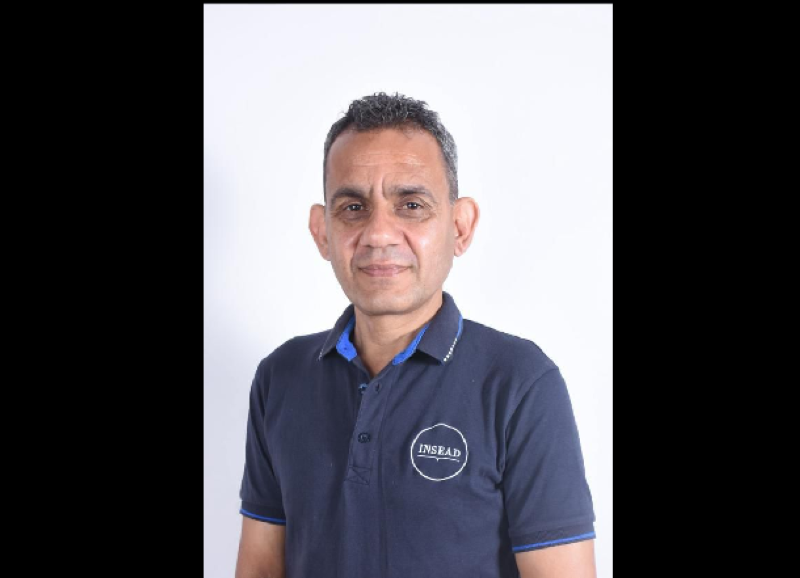
WorldLink began in 1995 with very little capital. Founder Dileep Agrawal used savings from his time in the United States. The company started from a single room in his family home. Today, after three decades, WorldLink has become one of Nepal’s largest internet service providers. Keshav Nepal, Chief Executive Officer of WorldLink Communications, leads one of Nepal’s largest internet service providers. He has played a key role in expanding broadband access and driving the shift to fibre-to-the-home across the country. In this interview with Kiran Lama of The Himalayan Times, he discusses the company’s growth, strategy, and its focus on connecting Nepal. Excerpts:
How much initial funding did WorldLink start with in 1995, and what is the company’s estimated brand value today after three decades of operation?
WorldLink started with pocket money saved by our chairman while he was studying in the United States. It was only a few thousand dollars. The company began from a room in his parents’ house. Today, WorldLink is worth approximately Rs 40 billion.
WorldLink recently reached the milestone of one million customers. How many years did it take to reach the first 100,000 customers compared to the time taken to acquire the remaining 900,000?
WorldLink started in 1995 and reached its first 100,000 customers in 2017, which took 22 years. The next 900,000 customers were added by 2025, in about eight years.
What are the company’s specific market share targets, and how many employees are currently mobilised to reach these goals?
The company currently holds around 35 per cent market share and aims to reach 40 per cent. About 5,000 staff are working towards this goal.
What were the major infrastructure challenges WorldLink faced when introducing high-speed internet, particularly in competition with the state-owned Nepal Telecom?
The biggest challenge was building the network from scratch, which required significant capital expenditure. No providers had built FTTH networks at the time, so sharing infrastructure was not an option. Nepal Telecom had an advantage with its existing copper network and ADSL service. Once WorldLink deployed FTTH, which offered better performance than copper, its market share began to grow.
WorldLink has attracted significant foreign investment recently. Which international organisations have invested in the company, and how much capital have they provided?
British International Investment, a development finance institution of the UK government, has invested more than Rs 2 billion. Dolma Impact Fund has invested Rs 900 million, and Finnfund, a Finnish development finance institution, has invested Rs 1.4 billion.
While WorldLink has expanded to 75 districts, which two districts are still awaiting service, and why are technical field repairs limited to between 7 am and 7 pm?
WorldLink does not operate in Manang and Mustang. These areas are already served by other providers and are largely tourist destinations. The company focuses on underserved and underprivileged regions. Technical repairs at customer premises are carried out between 7 am and 7 pm because most work involves poles and overhead wiring. This is considered too risky in the dark, so the restriction is in place for staff safety.
How does the company justify its average monthly fee of Rs 1,000 as affordable for the average Nepali family?
The company offers promotional discounts in rural areas, where the monthly fee can be below Rs 1,000. A significant portion of what customers pay goes directly to the government through taxes such as VAT and TSC. The company believes the pricing is within reach for most households. When compared with other regular expenses such as gas and electricity, the service provides strong value. It is used by the whole family and offers unlimited data, which would otherwise be more expensive on cellular networks.
WorldLink describes itself as a vision-driven company. Founder Dileep Agrawal started with a goal to reach every part of the country. The company says it continues to work towards connecting every corner of Nepal.








Post Comment