‘We are transitioning from dependency to mutual economic partnerships’ – The Himalayan Times – Nepal’s No.1 English Daily Newspaper
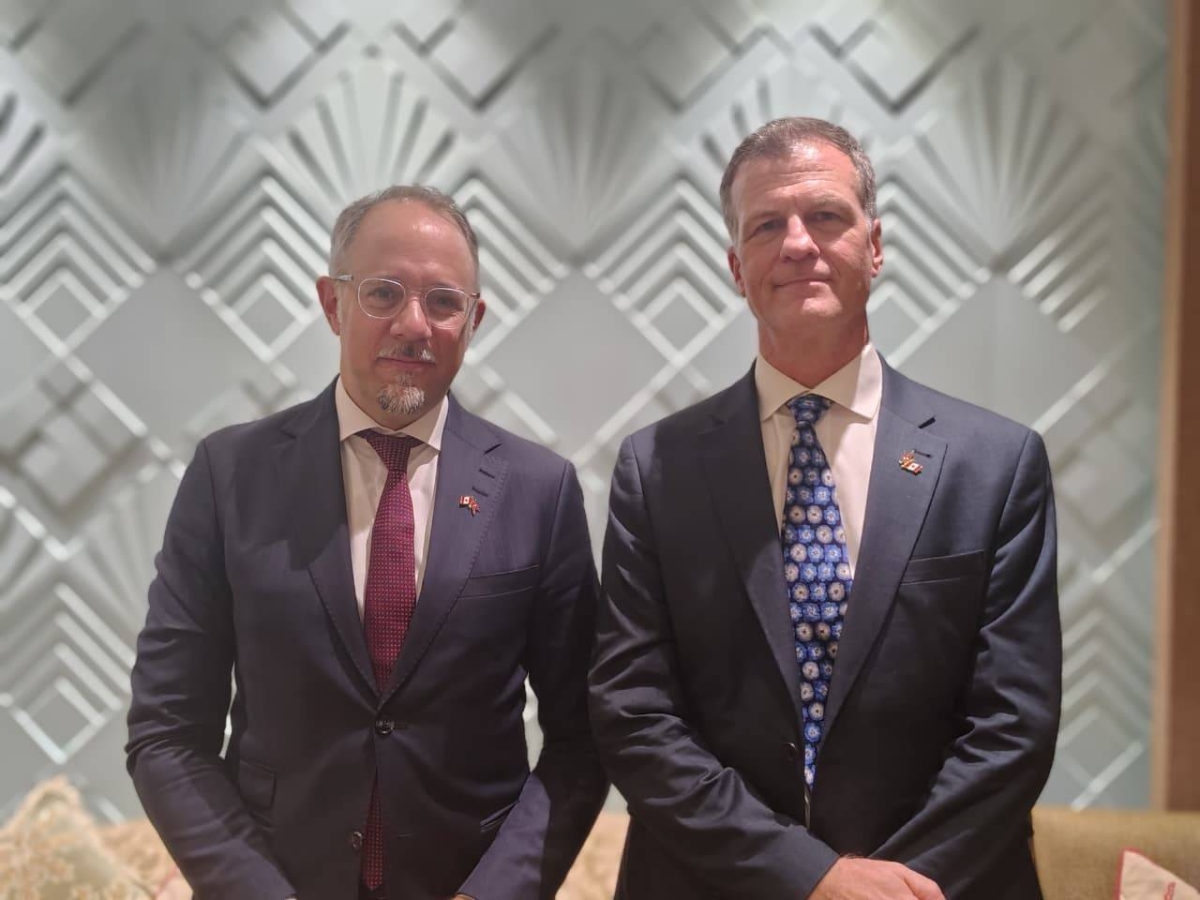
Nepal and Canada share over six decades of formal diplomatic ties. In an exclusive interview, Bal Krishna Sah of The Himalayan Times spoke with Canada’s visiting Director-General for South Asia, Jean-Christian Brillant, and Deputy Ambassador Allen Mark about the results of the Fourth Edition of the Nepal-Canada Bilateral Consultation Mechanism, the changing dynamics of bilateral cooperation under Canada’s new administration, green energy collaboration, and key priorities in student welfare and global governance. Excerpts:
WHAT IS THE PRIMARY PURPOSE OF YOUR CURRENT VISIT TO NEPAL, AND WHY IS THIS TIMING SIGNIFICANT?
MARK: The proximate reason for our visit is to participate in the fourth edition of the bilateral consultation mechanism, which we have maintained with Nepal since 2018. This framework enables us to review priorities, strengthen collaboration and explore new partnership opportunities.
This initiative is especially exciting because of the significant political transitions occurring in both countries. Nepal has undergone a significant democratic transformation, while Prime Minister Mark Carney’s government in Canada places a renewed emphasis on broadening and deepening international collaboration.
BRILLANT: This visit offers a timely opportunity to take stock with fresh eyes and align our shared goals. Furthermore, our engagement stems from a deep friendship and a desire to build upon strong people-to-people connections, particularly through the Nepalese diaspora in Canada and the growing community of Nepali international students.
HAVING FOLLOWED NEPAL’S POLITICAL SHIFTS OVER THE YEARS, HOW IS CANADA OBSERVING CURRENT DEVELOPMENTS, AND WHERE DO YOU SEE COMMON GROUND?
MARK: We recently met three newly elected members of Parliament from the long- standing Canada-Nepal Parliamentary Friendship Group, and we could clearly see the confidence and optimism that Generation Z has brought to governance. While youth movements are part of a larger regional dynamic, Nepal stands out because this transition has created genuine hope for combating corruption, improving stability, making the country more liveable and cultivating investor-friendly environment.
HOW WOULD YOU COMPARE THE EXPERIENCE OF NAVIGATING BILATERAL RELATIONS WITH NEPAL TODAY COMPARED TO PAST DECADES?
MARK: Throughout our 60year diplomatic history, Nepal has experienced numerous political transitions and periods of hardship, which we have closely monitored. For many decades, Canada was primarily a traditional donor, and we value the long-standing recognition of those contributions. However, our broader foreign policy has shifted away from aid for its own sake and towards fostering economic partnerships with mutual benefits. The relationship is transitioning away from dependency and toward shared economic growth.
WHAT IS THE CURRENT STATUS OF TRADE RELATIONS, AND WHICH SPECIFIC SECTORS ARE BEING PRIORITISED FOR FUTURE COLLABORATION?
MARK: Prime Minister Mark Carney has established a national goal of doubling Canada’s non-US exports in order to diversify international relationships and reduce reliance on a single market.
When it comes to Nepal, clean energy and hydropower are the most popular sectors. Canada has advanced technology and sector expertise that is already being used locally. Canadian companies are actively exploring the market, and we are working with the Asian Development Bank on infrastructure financing. Furthermore, industry partnerships have already been formed, such as those between the Canadian Dam Association and the Independent Power Producers Association. In the context of the global green energy transition, both countries have abundant hydropower resources to support a shift away from traditional fuels.
BRILLANT: Beyond Nepal, Canada is gradually broadening its economic strategy in South Asia, including improved bilateral relations with India, Bangladesh, Pakistan, and Sri Lanka. In managing these ties, we also recognise the critical diplomatic contributions of Nepal’s Ambassador to Canada, Bharat Raj Paudel.
CLIMATE CHANGE IS A CRITICAL CHALLENGE FOR BOTH NATIONS. HOW CAN NEPAL AND CANADA COOPERATE IN THIS DOMAIN?
MARK: Both countries are directly affected by severe climate change, from widespread forest fires, melting glaciers and thawing permafrost in Canada to vulnerable mountain ecosystems in Nepal.
Nepal deserves special recognition for taking proactive measures despite contributing a small portion of global emissions. Notably, Nepal is at the forefront of electric vehicle adoption, providing valuable insights. Climate change adaptation, disaster risk reduction, clean energy transition, and the incorporation of Indigenous and local knowledge into environmental policies are all important areas of mutual collaboration.
ASIDE FROM CLEAN ENERGY AND CLIMATE ACTION, WHAT OTHER POTENTIAL AREAS EXIST FOR BILATERAL COOPERATION?
MARK: Education, research collaborations, and institutional links are key areas of opportunity. Given the large number of Nepali students in Canada, we hope to facilitate faculty exchanges, collaborative research projects and broader academic institutional partnerships.
While Canada does not currently have a residential embassy in Kathmandu and instead operates out of New Delhi with a dedicated honorary consul in Nepal, frequent diplomatic visits allow us to actively maintain and strengthen this bilateral relationship.
WITH CANADA’S PIVOT TOWARD ECONOMIC PARTNERSHIPS, DOES THIS IMPLY A REDUCED FOCUS ON CORE VALUES SUCH AS HUMAN RIGHTS AND GOVERNANCE?
MARK: Our engagement remains fundamentally values-based. Canada remains deeply committed to human rights, good governance, gender equality and environmental stewardship. Applying the lens of mutual economic prosperity responds to urgent global economic realities while preserving the core democratic values that we continue to champion and value in our partners, such as Nepal.
MANY NEPALI STUDENTS IN CANADA FACE ECONOMIC PRESSURES, INCLUDING HOUSING SHORTAGES AND COMPETITIVE JOB MARKETS. HOW IS CANADA ADDRESSING THESE CONCERNS?
MARK: Canada is not immune to global economic pressures, such as inflation and housing availability, which will remain top priorities for Canadians into 2026. Nonetheless, Canada remains open to international students and committed to providing a high-quality education.
Education is managed in close collaboration with provincial and territorial authorities. Several funding mechanisms are available, including the Government of Canada’s Study in Canada Scholarship Programme and institutional offerings. We encourage prospective students to contact recognised Canadian institutions directly, to use established campus support networks, and to report any instances of third-party exploitation or unethical practices.
GIVEN CURRENT GEOPOLITICAL VOLATILITY AND CONFLICT AROUND THE WORLD, HOW DOES CANADA VIEW THE BROADER INTERNATIONAL LANDSCAPE?
BRILLANT: We live in truly uncertain times. Our Prime Minister’s evolving approach to international relations reflects a global landscape marked by disruption, particularly across global supply chains that are critical to our population’s economic prosperity and livelihood.
We have reached a point of rupture, and it would be unrealistic to expect a return to previous global baselines. As a result, Canada must enter into strategic partnerships that allow us to achieve capabilities and economic sovereignty across various domains. At the same time, we remain deeply concerned by ongoing global conflicts. Our foreign policy leadership remains actively engaged in these crises, from supporting coalition efforts in response to Russia’s illegal invasion of Ukraine to encouraging all parties in West Asia to seek diplomatic solutions at the negotiating table. Furthermore, Minister of Foreign Affairs Anita Anand paid a recent visit to Islamabad to discuss bilateral relations between Canada and Pakistan, as well as to support regional efforts to moderate and de-escalate ongoing tensions.












Post Comment