EV Refueling as Fast as Gasoline
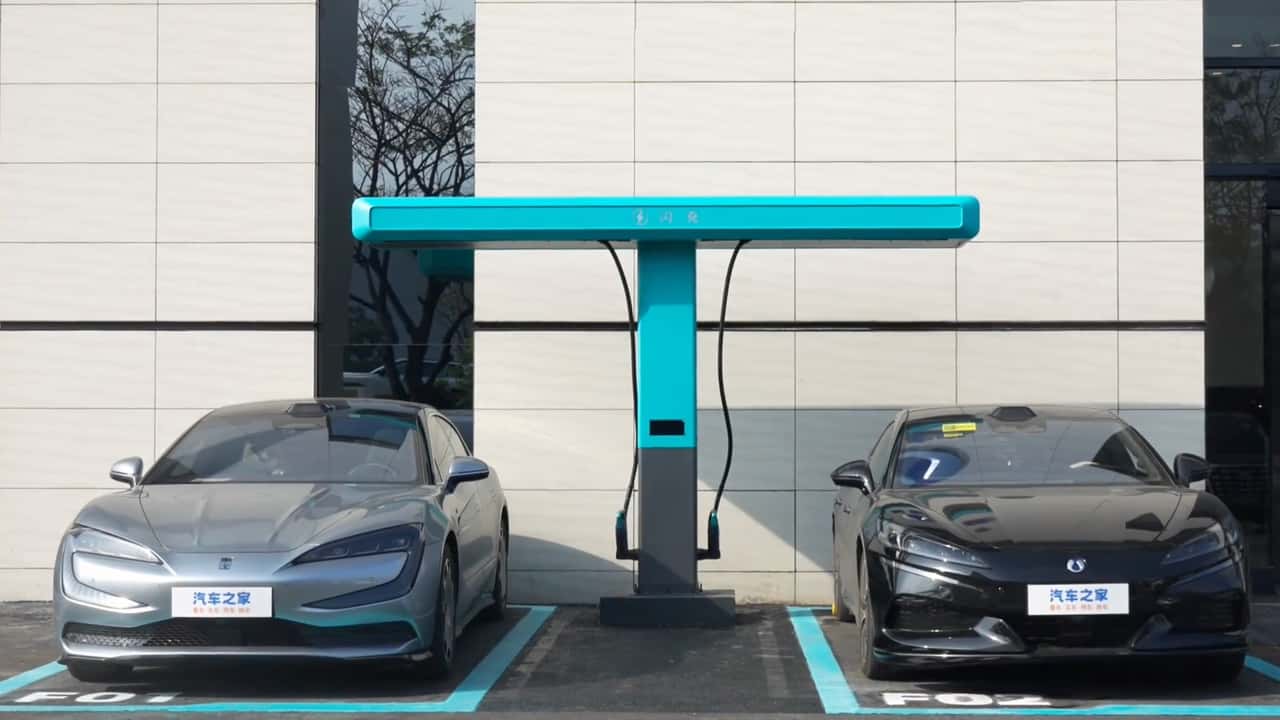
The long-standing argument that “EVs take too long to charge” just lost its main pillar. On March 5, 2026, BYD officially unveiled its “Flash Charging” network alongside the second-generation Blade Battery 2.0. By utilizing a massive 1.5-megawatt (1,500 kW) output, BYD’s new stations allow drivers to pull in, plug in, and pull out in the same time it takes to fill a tank of gas.
This “Flash Charging” technology doesn’t just push more power; it fundamentally changes the physical and economic experience of the charging stop.
Table of Contents
- The 5-Minute Milestone: 10% to 70%
- Megawatt Power: How 1,500 kW Works
- The “Station-Within-a-Station” Strategy
- T-Shaped Design: Solving the Cable Struggle
- Rollout: 20,000 Stations by the End of 2026
The 5-Minute Milestone: 10% to 70%
BYD’s new technology targets the “Golden 5 Minutes.” In internal demonstrations using the Denza Z9GT, the vehicle added roughly 400 kilometers (248 miles) of range in just 300 seconds.
- Speed: 10% to 70% in 5 minutes; 10% to 97% in 9 minutes.
- Cold Weather Performance: Even at -30°C, the battery reaches 97% in just 12 minutes—effectively solving the “winter charging wall” that plagues current EVs.
- Efficiency: The system adds approximately 2 kilometers of range for every second the car remains plugged in.
Megawatt Power: How 1,500 kW Works
To achieve these speeds, BYD moved to a full 1,000V high-voltage architecture. While a standard Tesla Supercharger V4 peaks at around 350-500 kW, BYD’s Flash Charger delivers triple that power through a single connector.
This requires the “Flash Charging Battery,” which features ultra-fast ion channels that reduce internal resistance by 50%. This allows the battery to absorb a massive 1,000A current without overheating or suffering the degradation typical of rapid charging.
The “Station-Within-a-Station” Strategy
A common criticism of megawatt charging is the immense strain it places on the local power grid. BYD CEO Wang Chuanfu addressed this with a brilliant “buffer” solution.
Rather than drawing 1.5 MW directly from the grid—which would require massive infrastructure upgrades—BYD installs integrated energy storage batteries at each site. The station “slowly” sips power from the grid 24/7 to fill these storage tanks. When a car connects, the station “flashes” that stored energy into the vehicle at high speed. This allows BYD to install these units as easily as an air conditioner.
T-Shaped Design: Solving the Cable Struggle
BYD also redesigned the physical station to mimic the ergonomics of a gas pump. The new T-shaped “Zero-Gravity” piles feature:
- Overhead Sliding Rails: The cables hang from above, allowing the charging gun to move left or right to reach ports on any side of the vehicle.
- Cleanliness: Because the cables never touch the ground, they stay clean and are significantly easier to handle with one hand.
- Compact Footprint: The T-design allows two cars to charge from a single narrow pillar, maximizing space in crowded urban areas.
Rollout: 20,000 Stations by the End of 2026
BYD is not just testing this in a lab; the rollout is already aggressive. As of March 2026, the company has already completed 4,239 stations in China.
| Target Location | 2026 Goal | Proximity Goal |
| Urban Areas | 18,000 Stations | Within 5 km for 90% of drivers |
| Highways | 2,000 Stations | One station every 100 km |
| Global Expansion | Europe/Australia | Rollout begins Q4 2026 |
“The ultimate solution is to make charging as quick as refueling a gasoline car. We have reached that parity.” — Wang Chuanfu, BYD Chairman.











Post Comment