‘High remittance, low export are core problems’ – The Himalayan Times – Nepal’s No.1 English Daily Newspaper
KATHMANDU, AUGUST 8
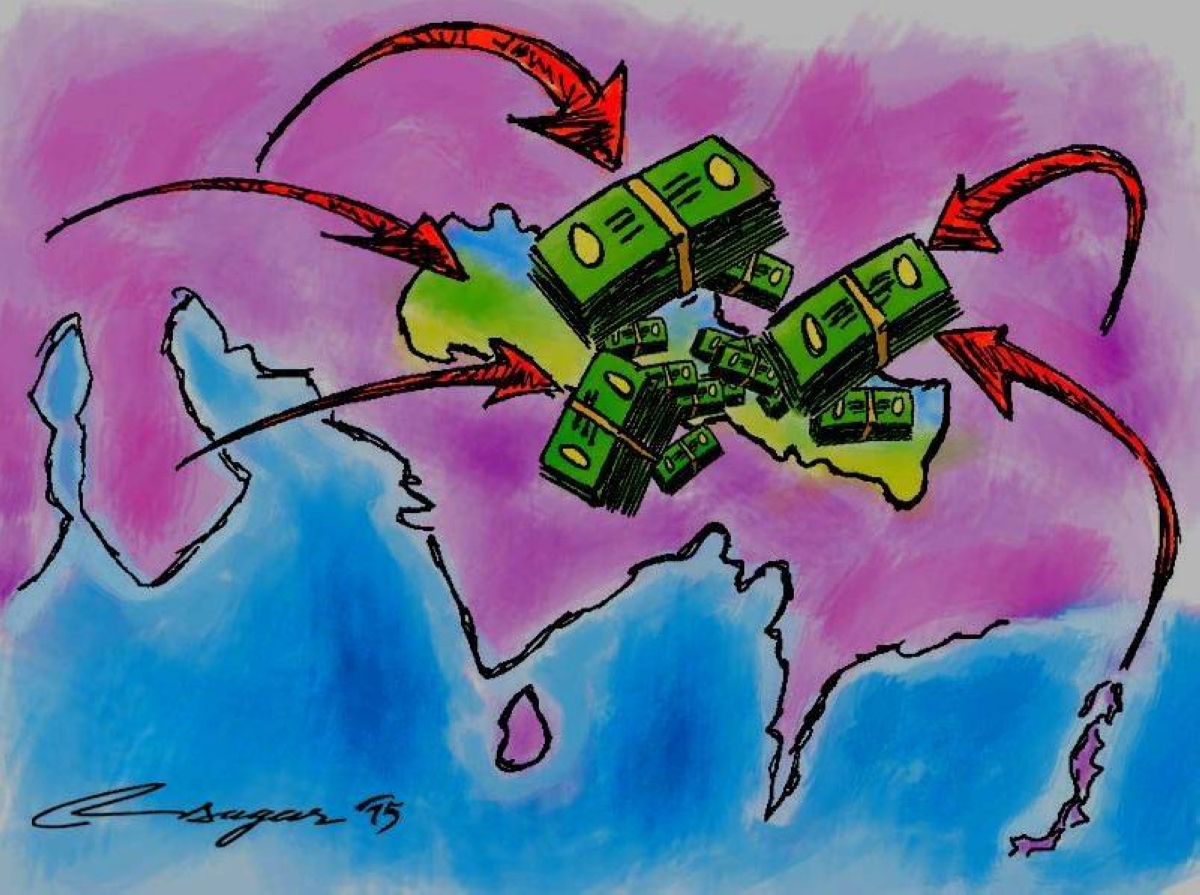
European Union Ambassador to Nepal Véronique Lorenzo has given a blunt assessment of Nepal’s economic structure, warning that over-reliance on remittances and an extremely low level of exports to the EU are the fundamental problems facing Nepal as it prepares to graduate from least developed country (LDC) status in 2026.
“Its overreliance on remittances – this is really where the basic problem is,” Lorenzo said at a recent Intergenerational Civic Forum event at Kathmandu University. This dependence, she argued, reflects a lack of productive employment and economic diversification within the country.
It shapes Nepal’s overall economic vulnerability and limited integration into global value chains. This results in a marginal trade relationship with the European Union. “When you look at the figures, Nepal exports very little to the European Union. Nepalese exports to the European Union are 100 million. That pales in comparison to Bangladesh’s $6 billion in exports.”
Because current export volumes are so low, the direct negative impact of losing LDC-related trade preferences after graduation will be minimal. “So, if you do little, the impact of the graduation will be minimal,” she said. “So what do you need? The mindset.”
Looking ahead to the post-graduation period, Lorenzo pointed to the EU’s Generalised Scheme of Preferences Plus (GSP+) as a potentially advantageous instrument. “The GSP Plus is very advantageous. It does not have tariffs on many sectors, but what it does have is a bunch of requirements in terms of labour standards, environmental standards, social standards, human rights, and conventions.” Meeting and maintaining these conditions will be essential if Nepal wishes to retain preferential market access.
Water scarcity and inefficient agricultural practices are also major concerns. Although Nepal benefits from Himalayan water resources, Lorenzo warned of a looming crisis. She said she was surprised that paddy cultivation continues to rely on traditional flood irrigation, a highly wasteful method that is no longer sustainable given declining water availability. The transition to water-saving technologies, such as drip irrigation, is necessary, but progress is hampered by both mindset and a lack of supportive government policy. The technologies exist; what is missing is systematic adoption and policy direction.
On implementation, Lorenzo said she has been explicit with the Nepali government that meaningful reforms cannot happen quickly. “I have been very clear with the government that this is not something you can do in six months, because there are a number of procedures that need to be [followed].”
The EU, she said, is working to support the creation of more jobs in Nepal while also pressing to improve the conditions under which migrants travel to Europe as soon as possible – noting that Nepal currently has only one bilateral labour agreement, with Romania, and one limited agreement with Germany.
She emphasised that once proper systems are in place and operational, effective management is possible. Migrants, she said, should be properly valued as workers rather than left in precarious situations.
As Nepal nears LDC graduation, she said, “The statistical impact on EU trade may be modest because the baseline is so low, but the underlying structural weaknesses – remittance dependence, weak export capacity, unsustainable water use, and inadequately regulated migration – require urgent changes in both policy and mindset if the country is to achieve a truly sustainable transition.”









Post Comment