California Garage Automatically Parks and Charges EVs
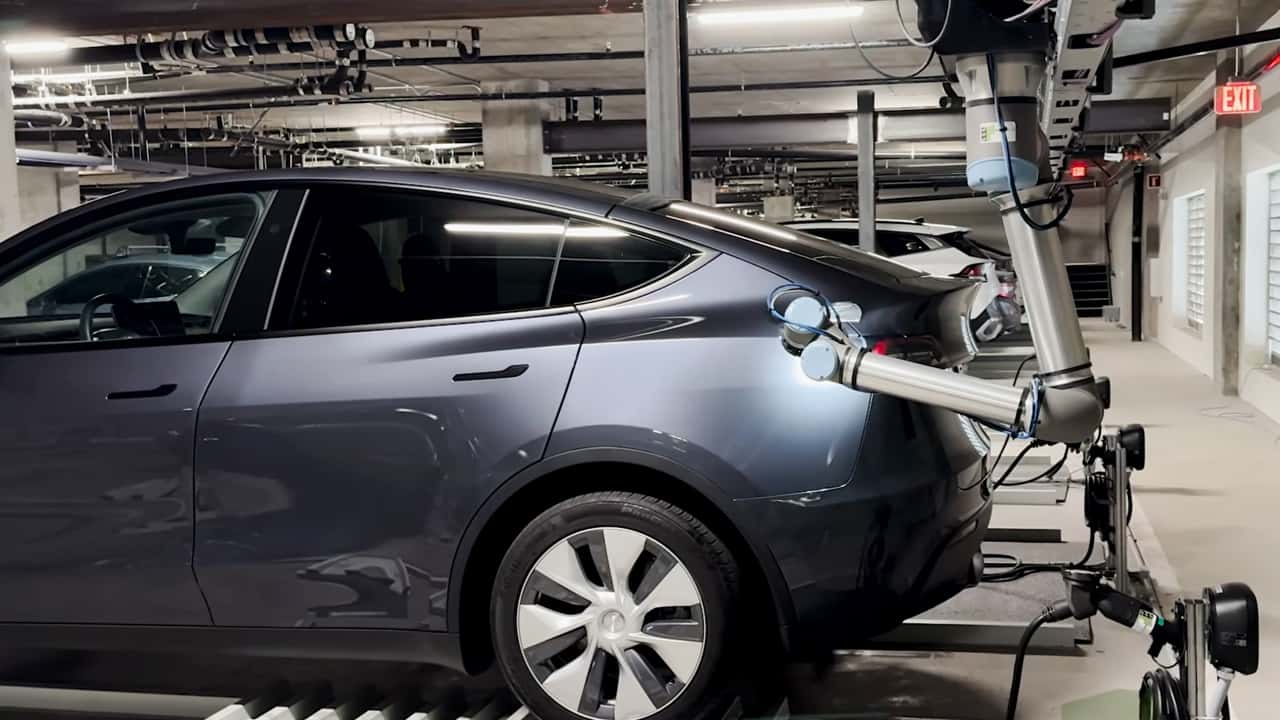
Imagine pulling up to a parking garage, stepping out of your car, and letting the building handle the rest. No searching for a space. No plugging in a charging cable. Just walk away. That’s exactly what a new automated garage system in California promises to deliver.
This next-generation facility combines robotic parking technology with autonomous EV charging, creating a seamless experience for electric vehicle owners.
How the System Works
The process is surprisingly simple. Drivers pull into a designated drop-off bay and exit the vehicle. From there, an automated platform moves the car into a parking slot using robotic lifts and rails.
Once positioned, a robotic charging arm connects directly to the vehicle’s charging port—without human assistance. When the driver returns, the system retrieves the car and ensures it’s fully charged.
Because of this design, drivers never need to search for open chargers or worry about unplugging someone else’s vehicle.
Why This Matters in California
California leads the United States in EV adoption. Cities like Los Angeles and San Francisco face growing demand for charging infrastructure, especially in dense urban areas.
Traditional parking garages struggle to provide enough accessible chargers. However, an automated system can rotate vehicles through charging spots efficiently. As a result, fewer physical chargers can serve more vehicles over time.
Additionally, robotic systems reduce human error and improve space utilization. Cars can be parked much closer together since no one needs to open doors after parking.
Solving an Urban EV Problem
One of the biggest EV challenges in cities is apartment and public charging access. Not everyone has a private garage at home.
By integrating automation with charging infrastructure, this California garage offers a scalable solution. It maximizes limited space while reducing congestion and charging conflicts.
The Bigger Picture
As EV adoption accelerates, smart infrastructure will become just as important as better batteries. Automated garages could represent the next step in urban mobility—where parking, charging, and retrieval happen seamlessly in the background.
If this model expands beyond California, the future of city parking may be far more hands-off than we imagined.












Post Comment